
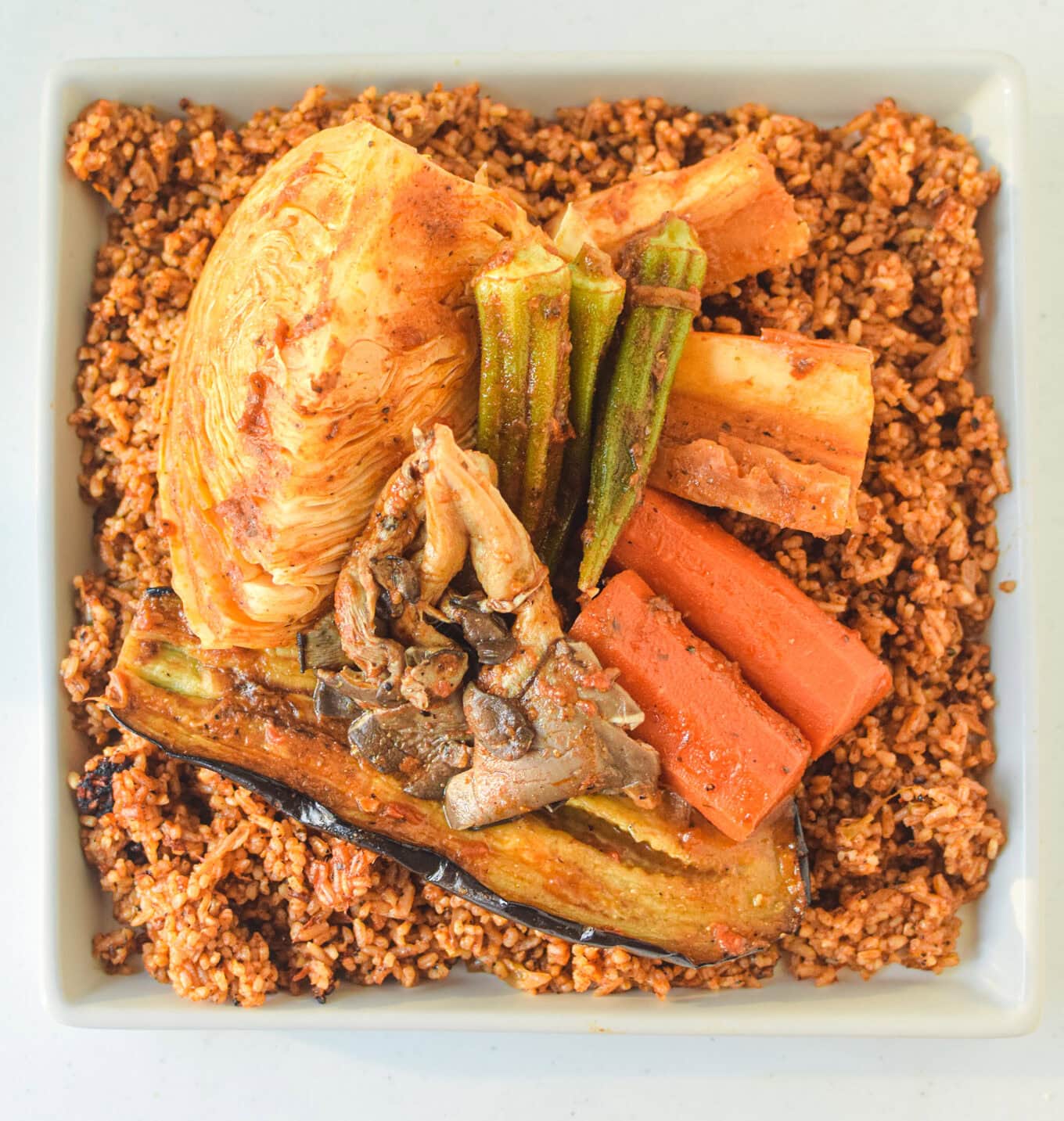
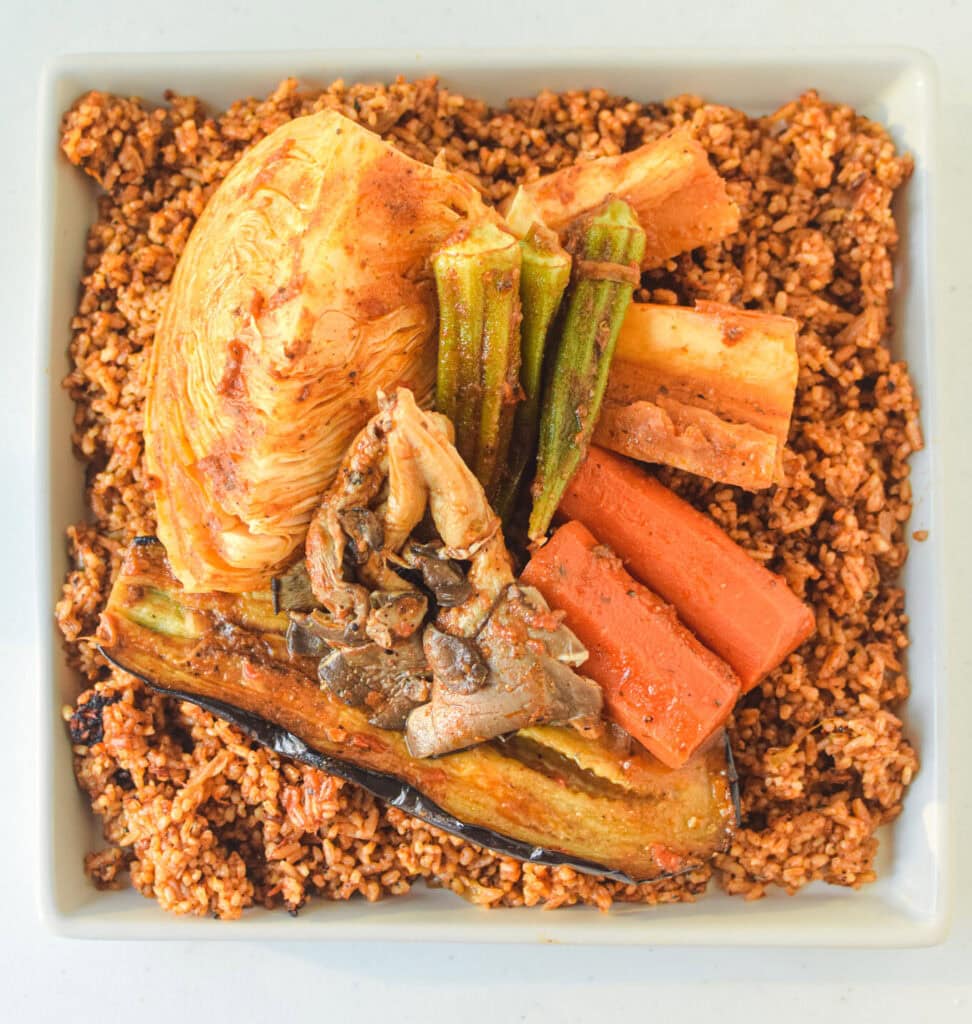
This vegetarian/vegan theiboudienne is a 100% plant-based alternative to Senegalese thieboudienne. It is full of flavour and absolutely delicious. This version is a revamped, simplified version with lots of details to help you make the perfect pot of rice.
Most people know thieboudienne (pronounced cheebu jeen) as the Senegambian fish-based red rice. Usually, the fish flavours (from the fried fish and fermented salted fish/sea snail) are the prominent flavours — fish is essential in the name. However, I think thieboudienne is as much about the vegetables and plant-based flavour as it is about the fish, which I intend to highlight in this recipe. There are no plant-based meats or alternatives, just vegetables, herbs and a lot of love. This is why I call my version thiebou-pas-dienne — rice without fish.
What is thieboudienne?
Thieboudienne is the Senegalese Jollof Rice (Gambia makes theirs pretty much identically, but they call it benachin). Thiep/ceeb is the Wolof word for rice, while dienne/jën is used to refer to fish. Traditionally, Thieboudienne is made with fish seasoned with a green herb mixture, which is fried and then cooked in a tomato-based stew with lots of veggies like cabbage, carrots, cassava, okra, eggplant, and more. Once the veggies are cooked, everything is removed, leaving a flavourful tomato broth in which the rice is cooked. The final dish is flavourful, drawing a lot of flavour from the fish.
Why is thiebouddiene so important?
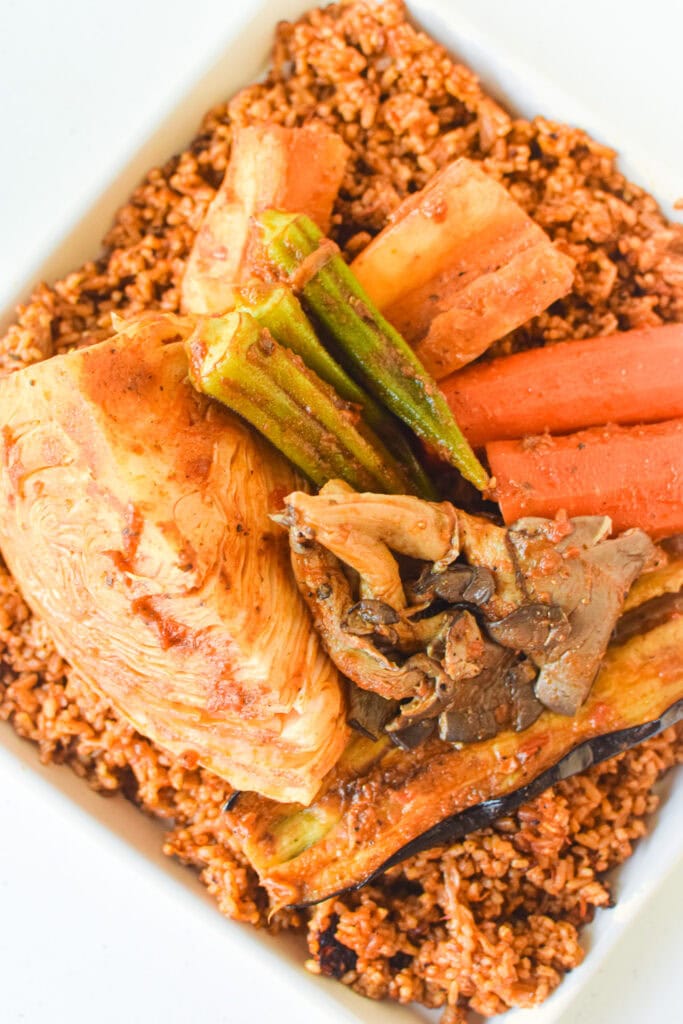
Thieboudienne is touted as the original Jollof Rice. Although it is not called Jollof, it is widely understood that the name Jollof is derived from Wolof, the language where this rice originated. People have credited its creation in the 1800s to Penda Mbaye, a chef in St. Louis, Senegal, who mixed rice with vegetables during a barley shortage. I am personally not sure how accurate the history of this dish is given the timeline, but it remains undisputed that Jollof comes from the Senegambian region. The Senegambian region, as far south as Liberia, is known for its acumen in rice cultivation, so a rice-based dish from Senegal truly highlights the agricultural practices of this part of West Africa. Thanks to the Wolof, West Africa has an amazing dish that is diverse across the region and celebrates our varied cultural and cooking traditions.
Why do you need to make a vegetarian thieboudienne
It is without a doubt that fish is essential in traditional thieboudienne. It is in the name. However, with so much focus on the fish, I feel like the vegetables and plant-based ingredients don’t get much love. Senegalese jollof rice has a rich flavour coming from many sources — the green seasoning, the tomatoes, the vegetables and the seasoning. The goal for this recipe is to allow the vegetables and plant-based ingredients to shine. My vegetarian thieboudienne follows a similar process to the traditional version, just without the fish. Relying on years of practice working through flavour profiles and adjusting the recipe, i believe I have something that is just as delicious. Here is why you need to make this recipe.
- This recipe provides a taste of Senegal for many who do not want to consume or cannot consume fish
- The recipe has been created with a deep knowledge of West African cooking and spices
- It is easy to follow.
- Since the original recipe, this vegetarian thieboudienne has been made simpler
What you will need for this vegetarian thieboudienne
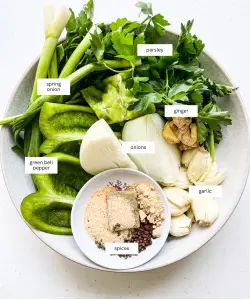
Nokoss Ingredients
- Green bell pepper
- Garlic
- small bunch of parsley
- onion
- ginger
- Garlic and Onion powder
- Black Pepper
- oil
- 1 vegetable bouillon cube (I use the Go Bio Organic Mushroom Bouillon)
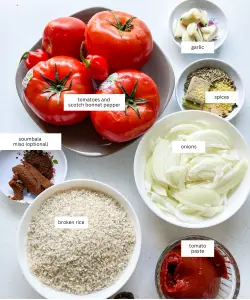
Stew Base
- Vegetable oil
- Aromatics: onion, garlic, scotch bonnet pepper
- Tomato: Tomato paste and Fresh Tomatoes
- Miso paste (optional) can use soy sauce instead
- Soumbala (Fermented Locust Beans)
- Nokoss from above
- Broken Rice
- spices (garlic powder, onion powder, smoked paprika, all purpose seasoning — or my homemade umami seasoning)
- Water
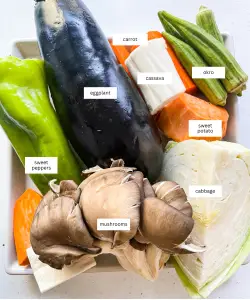
Vegetables
You can mix and match the vegetables and root vegetables. I would suggest picking three vegetables and one root vegetable.
- Mushrooms (Oyster)
- Eggplant or Garden Eggs (If it’s large, consider slicing into thin slices)
- Cabbage
- Carrot
- Cassava/ Yucca (peeled and cored)
- 5 okra
- Sweet Potato (roughly chopped)
How to make vegetarian thieboudienne
Make Nokoss
- In a food processor, combine all the ingredients and pulse until a paste forms. You will not need all the green seasoning, as this is great for all sorts of recipes. Save 1/2 for the thieboudienne and freeze the rest into cubes.
Marinate the Vegetables
- Mix 2-3 tablespoons of the nokoss with the vegetables (not the root vegetables). Coat them well and set aside.
Make the Thieboudienne stew
- In a large pot, saute the onions in oil until soft and fragrant
- Add the soumbala. Oil helps bring out the aroma compounds, which is why I add it this early in the cooking process. Traditionally, fermented sea snails (yet) are used. To complement the umami flavour, I use a mix of soumbala and miso, but if you do not have miso, you can use soy sauce.
- Once fragrant, add the tomato paste and cook at medium-low for at least 5 to 10 minutes to concentrate the tomato flavour, while keeping it from burning. Tomato paste is essential for that rich tomato flavour in thieboudienne, so this step is important.
- Blend the tomatoes and scotch bonnet pepper, then add to the tomato paste base. Bring to a boil, then add 1/4 cup of the nokoss and the spices. This revamped recipe tones down the spices significantly to keep the stew flavourful but not bitter. Cook the stew for at least 15 minutes, stirring periodically to prevent burning. If the stew tastes sour or bitter, add about 1/8 teaspoon of baking soda to neutralize the tomatoes’ acidity.
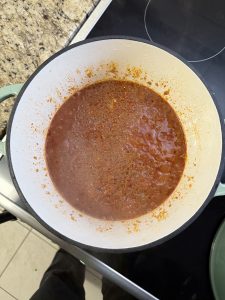
- While the stew is cooking, sear the vegetables. Traditionally, the fish is fried before adding it to the stew, and I wanted to maintain this method for the vegetables. Just sear in a hot pan long enough to crisp, but not to fully cook as these will go in the pot with the stew.
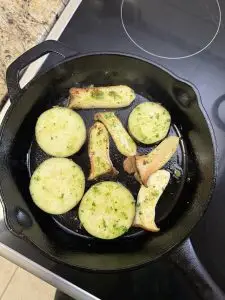
- Once done searing the vegetables, add 2 cups of water to the stew and place the vegetables into the stew. Cook the vegetables for 10 -15 minutes, removing them as they cook. Soft vegetables like eggplant, carrots, and okro will take up to 10 minutes to cook, while root vegetables will need about 15 minutes.
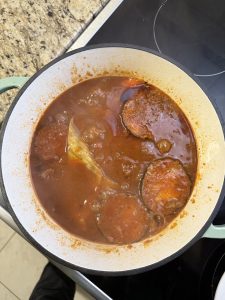
- Once the vegetables have been removed, add the rice.
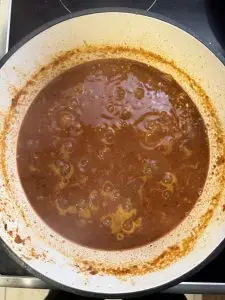
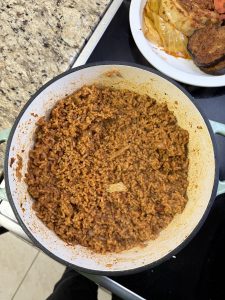
- Taste for seasoning and add more salt or a bouillon cube to ensure that the rice is well seasoned. Add 1/4 cup of water, mix well and cover the rice. Cook at medium-low heat for about 40 minutes until the rice is tender. We are using less water than one might expect because we want the rice to cook slowly and absorb as much flavour as possible.
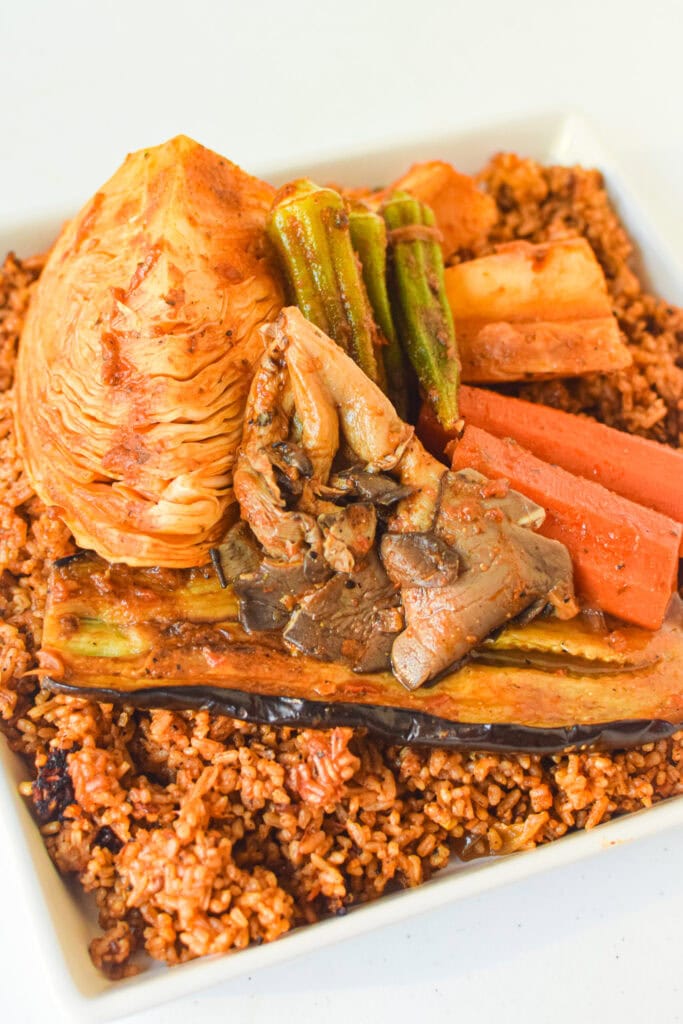
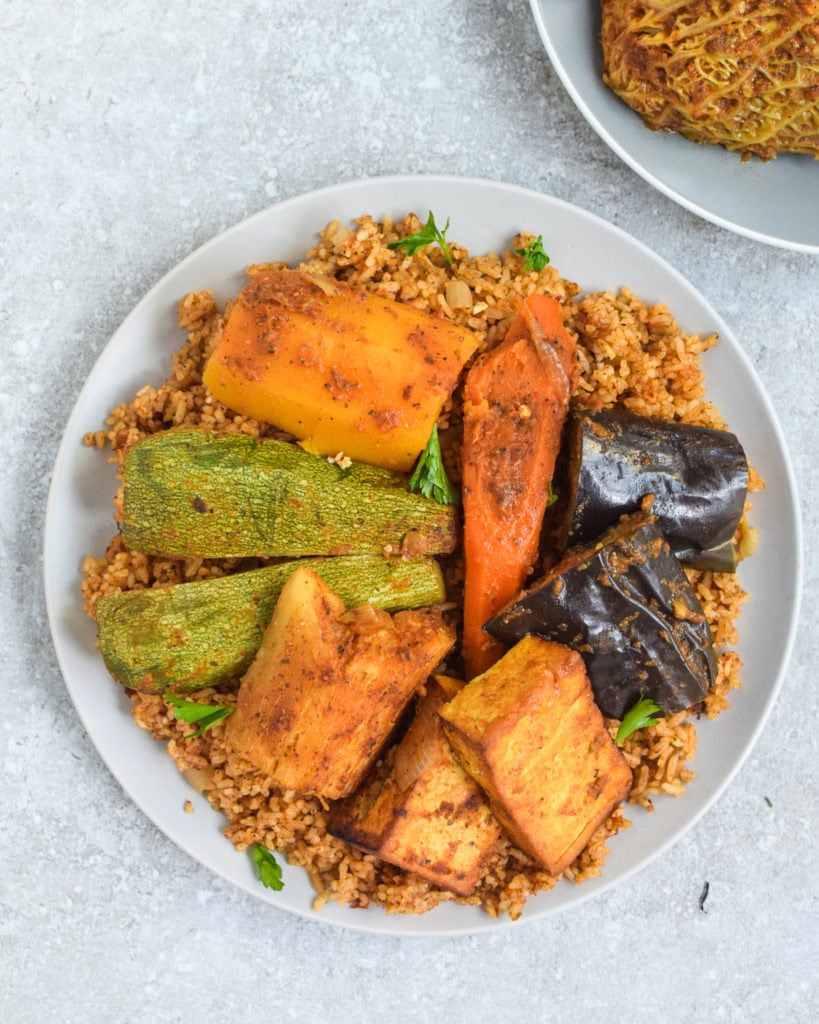
- Serve everything on a plate together
FAQ + Substitutions
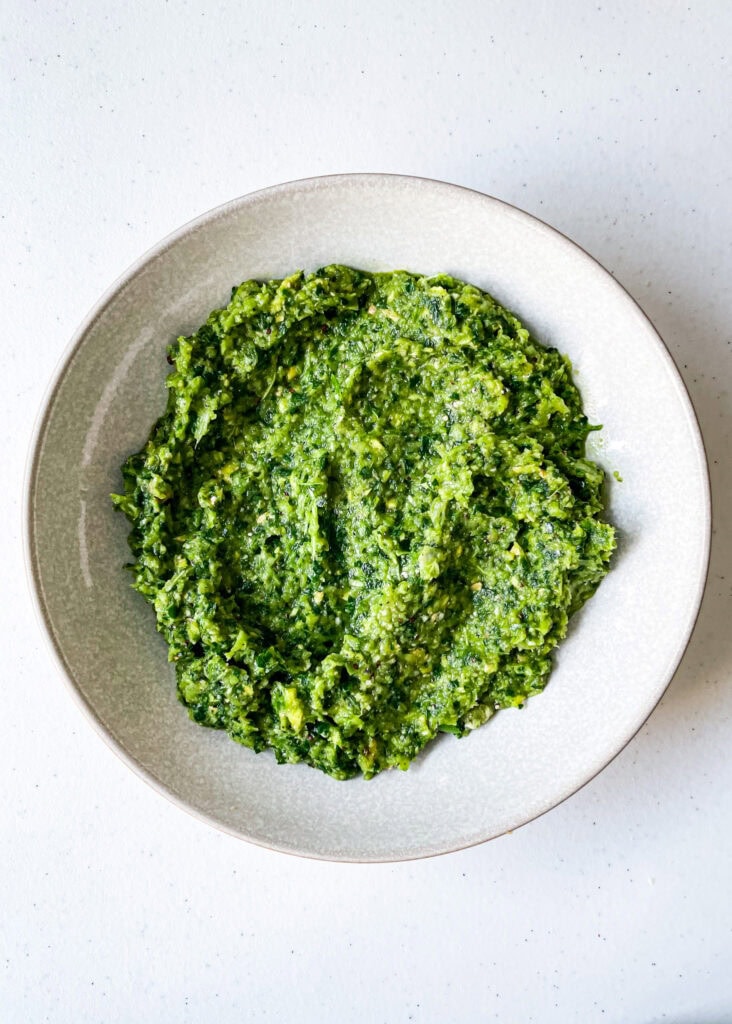
- What should I do with the rest of the nokoss? You can use it to make tofu like my Nokoss Tofu Recipe. You can add it to your favourite soups and stews (like Okra) or use it to cook any rice dishes. It freezes very well, and all you need to do is leave it out to thaw for a few hours before using it.
- Can I use brown rice? Jollof rice requires very specific ratios of water to rice. I have not tested the recipe with brown rice, so I would not recommend a 1-to-1 swap. I do have a brown rice jollof recipe you can check out.
- Can I use long-grain rice? Yes you can
- Can I use any vegetables? You can use any type of carrot, any type of cabbage, or any type of root vegetable. You can omit whichever you do not care for and substitute with alternatives like zucchini, squash, or peppers. Just make sure not to overcook them.
- I want to add more protein, any suggestions? There are some renditions of thiebuodienne that add boiled beans. You can add it to the stew before adding the rice. If you want protein sides, I suggest checking out this Nokoss Tofu Recipe.
- Can I make this in the oven or Instant Pot? I personally do not make jollof in the Instant Pot because it does require active cooking. Once you add the rice to the stew, you can transfer the pot to the oven and cook at 350°F, stirring periodically.
- My rice came out too mushy. Unfortunately, this might be due to using too much water. This recipe purposely uses little water as the stew already has enough moisture to cook the rice.
- I do not have access to a few of the ingredients (soumbala or miso), any suggestions?
- The soumbala is quite a unique flavour. Traditional thieboudienne might not include it, but the smell adds that depth of flavour the traditional recipe has. You can remove it.
- The miso is optional. You can use soy sauce or sea salt. This is to add a savoury umami flavour.
If you like this recipe, please make sure to leave a comment below! Thank you!
Ingredients
Nokoss
- 6 cloves of garlic
- 1/2 green bell pepper
- 1 small bunch of parsley enough to fit 1.5 cups packed
- 1/2 onion
- 1 thumb-size of ginger
- 1 tsp garlic powder
- 1 tsp onion powder
- 1 tsp ground pepper
- 1 vegetable bouillon cube I used the Go Bio Mushroom Bouillon
- 1 tbsp oil
Stew for the Rice
- 1/2 cup oil I used avocado oil
- 1 medium onion diced
- 1 tbsp miso paste or soy sauce
- 1 tsp soumbala
- 5 cloves garlic
- 1/3 cup tomato paste
- 3 medium tomatoes
- 1-2 scotch bonnet pepper i like mine spicy but feel free to omit
- 1/4 cup nokoss from above
- 1 tsp garlic powder
- 1 tsp onion powder
- 1/2 tsp smoked paprika
- 1 tsp all purpose seasoning of choice
- 1 bouillon cube I use better than bouillon
- 2 1/4 cups of water
- 2 1/2 cups of broken rice I used West African white rice but you can use broken jasmine. Check FAQ for alternatives.
In case the stew is bitter/sour
- 1/8 tsp baking soda or
- 1/2 tsp sugar
Vegetables (choose 3 veggies and 1 root vegetable)
- 5-6 king oyster mushrooms (cut in half)
- 1 medium sized eggplant
- a quarter of a cabbage
- 5 okra
- 1/2 large sweet potato 1 small sweet potato works
- 1/2 large cassava freeze the other half for banku or fufu
Instructions
Nokoss
- Mix the spice blend with the rest of the nokoss ingredients and blend in a food processor or blender. For a smoother texture without added water, place onions at the bottom of the blender or closer to the blade
- Save 1/2 cup of the nokoss for the jollof rice and freeze the rest for later.
- Mix the soft vegetables (not the root vegetables) with 2-3 tablespoons of the nokoss to marinate. Set aside.
Stew and Rice
- Start by heating the oil at medium heat and sautéing the onions till soft
- Add the soumbala and cook for 1-2 minutes until fragrant. Add the miso or soy sauce.
- Add the tomato paste and cook at medium-low for 5-10 minutes.
- Blend the tomatoes with the scotch bonnet pepper and garlic, then add to the tomato paste. Bring to a boil
- Add the nokoss, spices, and bouillon paste, and cook at medium-low heat for 15 minutes.
- While the stew is cooking, sear the marinated vegetables (not the root vegetables) in a hot pan with oil. The goal is just develop colour and char, but not to fully cook the vegetables. This should take about 15 minutes, about the same time the stew would have been cooking for.
- If the stew is too sour, add 1/8 teaspoon of baking soda to neutralize the acid or 1/2 teaspoon of sugar.
- Add 2 cups of water to the stew and add the vegetables. Boil for about 10 -15 minutes. The softer vegetables, like eggplants, peppers, okra, and mushrooms, will need about 10 minutes, whereas the root vegetables (sweet potato or cassava) will need 15 minutes.
- Wash and add the rice. Add an extra 1/4 cup of water. Cover the pot well. Reduce the heat to medium-low and cook the rice for 40 minutes, mixing halfway. The rice might take longer. It is all about patience.
- Serve it all together on a plate. Place the rice at the bottom first, then layer the veggies on top.
- Serve with Nokoss tofu for some plant-based protein.
3 Responses
Just made this Thiebu Jenn and it is absolutely delicious!! The only difference is I used dried porcini instead of dried shiitake !! But regardless, it was ABSOLUTELY DELICIOUS ❤️
is it paramount that I use broken rice? i’m unable to source this, sadly only standard jasmine rice is avaialable. thank you,
Standard jasmine should be okay