

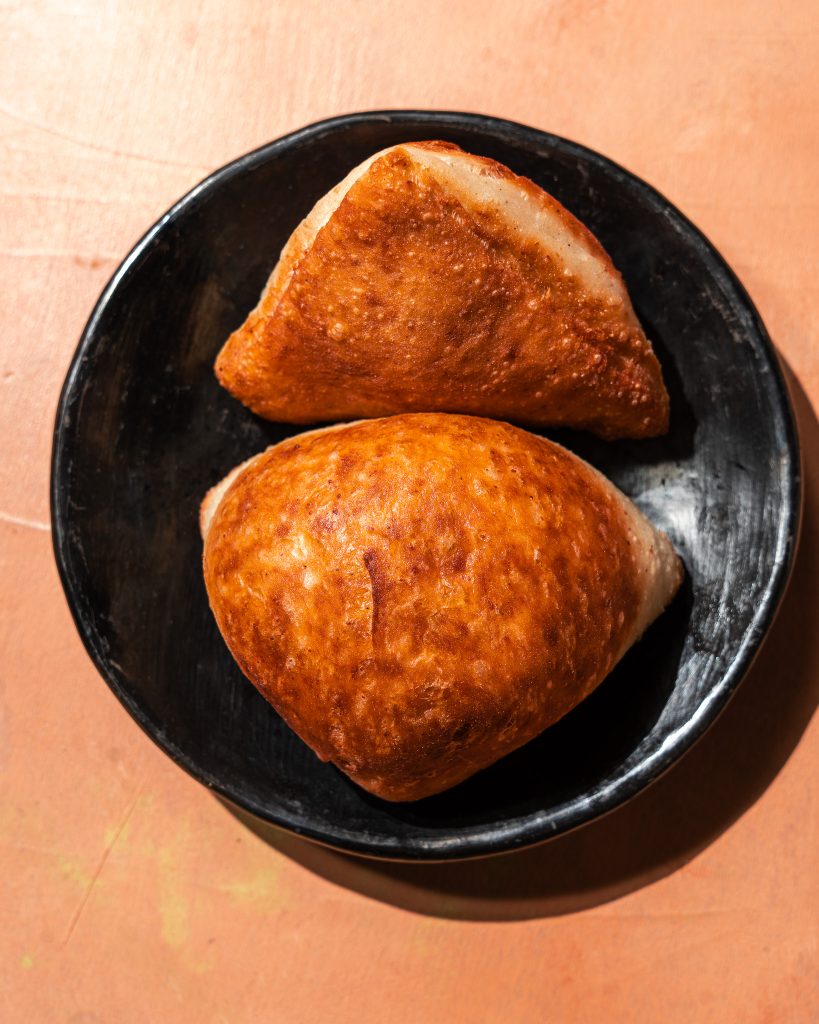
These soft, pillowy and fragrant mahamris are a hallmark of Swahili cooking. These East African fried doughs are simple, flavourful, requiring minimal effort yet yielding maximum reward. This recipe is a vegan friendly version that is easy to follow and perfect for any breakfast or midday snack with a cup of chai on the side.
What is Mahamri?
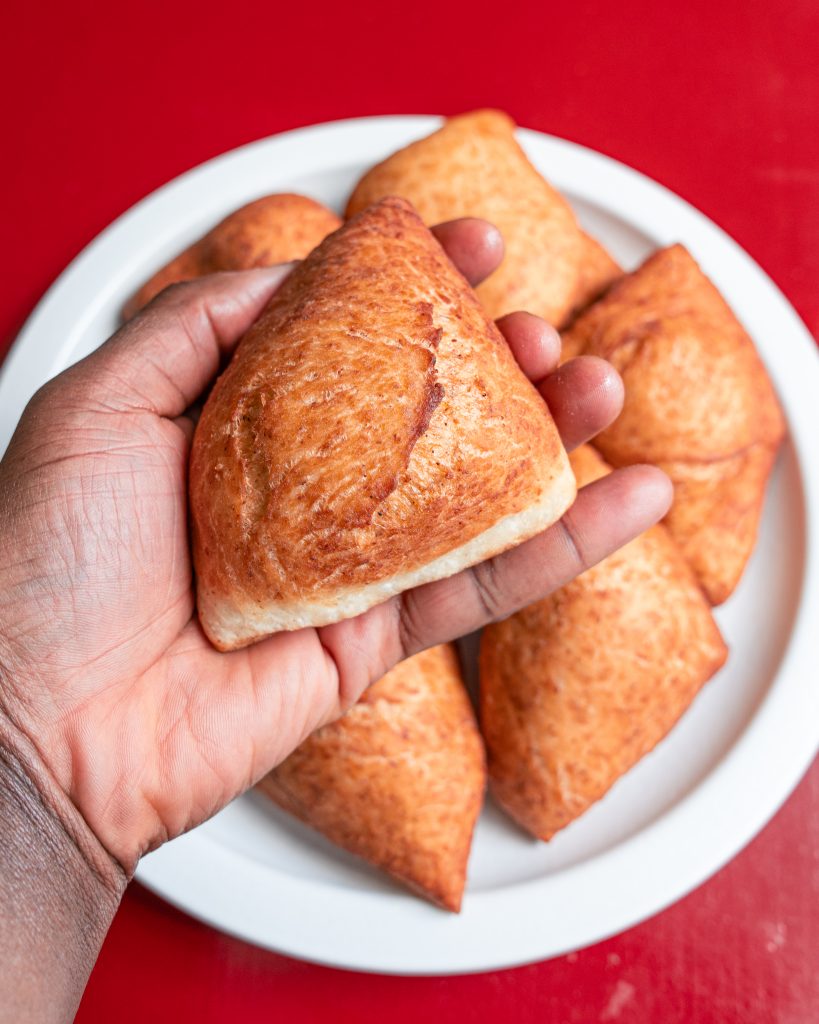
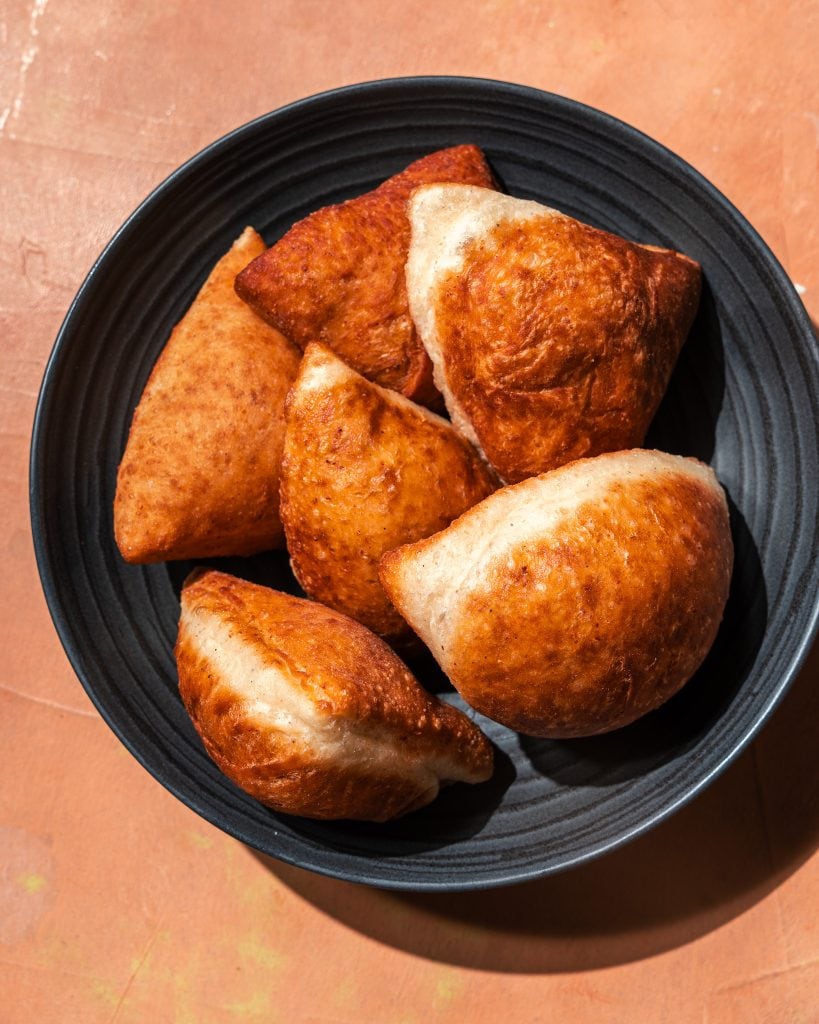
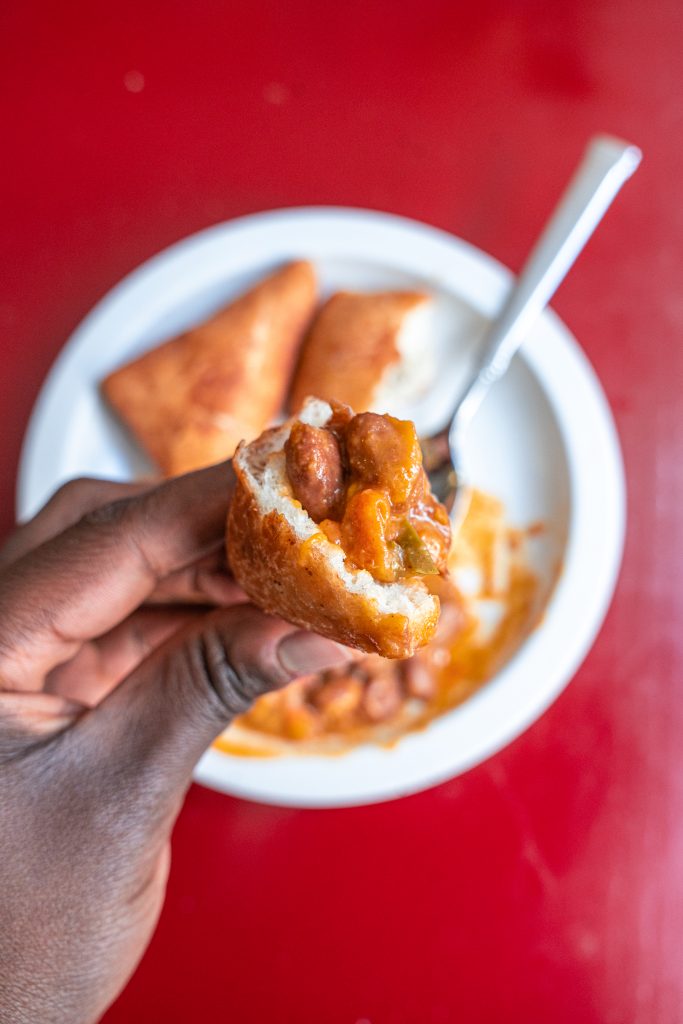
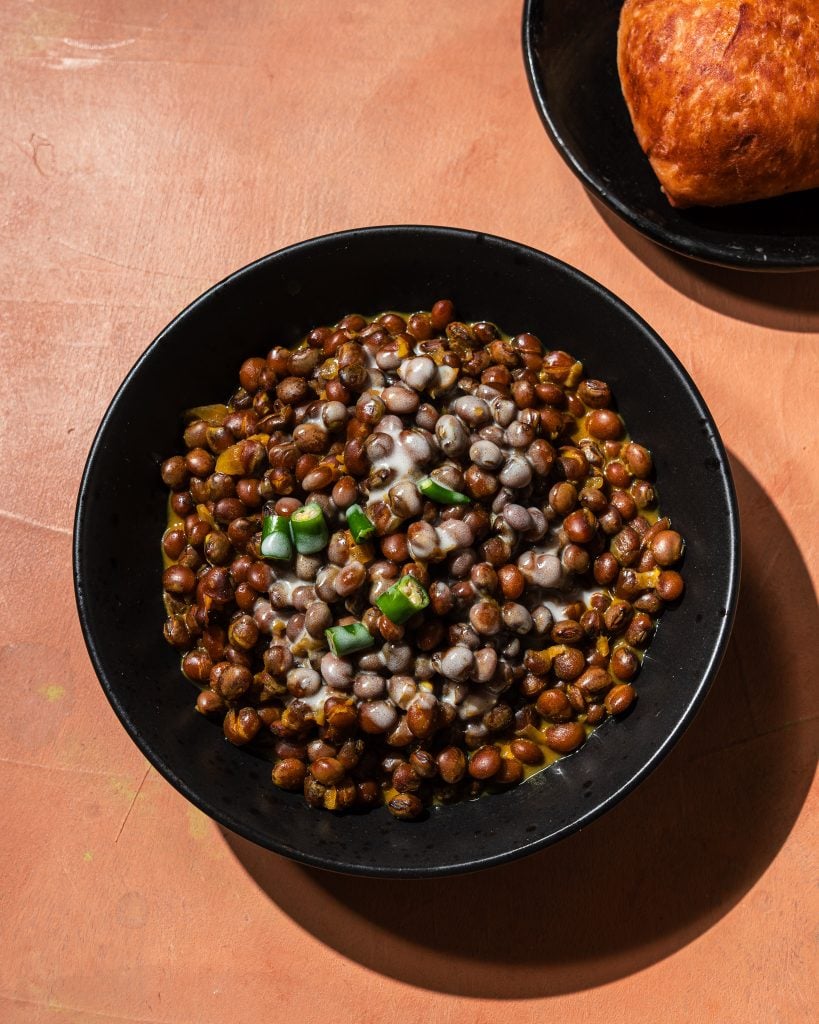
Mahamri is a sweetened fried dough seasoned with warm spices and paired with either chai or beans. It is one of many fried dough recipes you can find all across the African continent. Mahamri is typically eaten in East Africa and associated to Swahili culture with coconut milk and cardamom serving as important flavouring agents. They are fried as triangles or rhombuses and could have puff up with air pockets created by the yeast (if used). These are fried and sold on their own or can be enjoyed with a cup of chai (milky black tea seasoned with cardamom, ginger and sometimes cinnamon) or a side of maharagwe (kidney beans stewed in a flavourful tomato coconut base) or mbaazi ya nazi (pigeon peas in coconut milk). There are a lot of variations depending on where you find yourself in East Africa, and many off shoots with different names
What is the difference between Mandazi, Mahamri and Bur?
Growing up in Tanzania, what I had known to be Mandazi was a deep fried yeasted dough made with milk (mainly coconut milk) and seasoned with cardamom. But depending on who you ask in East Africa (mainly Tanzania or Kenya) the definition changes. A yeasted deep fried dough could be called mahamri. Some mention that the distinction is that mandazi is made with baking powder as the leavener while mahamri is made with yeast as the leavener. Mahamri is fried in ghee and the other in vegetable oil. Mahamri uses coconut milk, but many might use any regular milk or milk powder. Some add eggs (which I have been told is not authentic at all), others add oil and some add margarine. Along the East African coast to the Horn of Africa is a similar fried dough called Bur, which looks similar to mahamri, and does include coconut milk at all. The differences is a great demonstration of how diverse cooking can be especially across populations that share similar languages and culture. Looking at these differences offered options to make this recipe more accessible but also understand what is fundamental in mahamri. My rendition leans towards my childhood version as these evoke so many memories for me and is 100% vegan.
What ingredients are needed to make vegan mahamri
- All Purpose Flour.
- Sugar. Plain cane sugar is preferred. It is simple, accessible and has low flavour, especially as this recipe uses a lot of bold flavours. The sugar also affects the colour of the mahamri. More sugar means the mahamri will brown quicker. Less sugar means the mahamri might be paler. This recipe uses 1/4 cup of sugar. I do not recommend going above 1/3 cup. If you need more sweetness, pair the mahamri with a sweet chai or powdered sugar (which is not traditional but can suffice)
- Instant Yeast. Instant yeast is preferred as it does not require activating or a second proof.
- Salt. A pinch of salt is always needed in sweet recipes as it helps balance out flavours, enhance the sweetness and also improve the structure of the dough
- Cardamom. Cardamom is an essential spice in Swahili cooking. It is used in a diversity of recipes from chai to pilau and a distinctive flavour for mahamri. I recommend purchasing ground cardamom as fresh cardamom can be challenging to ground into a powder when small quantities are needed for individual recipes. But vanilla essence can also be a great alternative
- Oil. This is to add a bit of richness to the dough.
- Warm Milk (coconut or any plant based alternative). Typically I would go for coconut milk, especially if I am having this recipe with chai but if I am enjoying these with a side of beans cooked in a coconut base, I go with a non coconut plant based milk alternative, just so that it is not too much coconut. But, if you love coconut then go ahead and use coconut. I prefer to use light coconut milk given we are already adding oil and deep frying the recipe but use what ever you prefer. Warm milk is preferred as it support the yeast activity.
How to make the perfect mahamri
- First mix the dry ingredients. Always mix your dry ingredients first. This ensure that everything is mixed well and evenly distributed.
- Add the oil.
- Then add the warm milk in slowly. Depending on the humidity, temperature or brand of flour, each dough might need a little bit more or less liquid. For the amount of flour I use, I start with 1/2 cup of milk and add more if needed, typically needing not more than 2/3 cup of warm milk.
- Knead the dough well until soft. This ensures all the flour is properly hydrated and support strong gluten network that is perfect for the yeast.
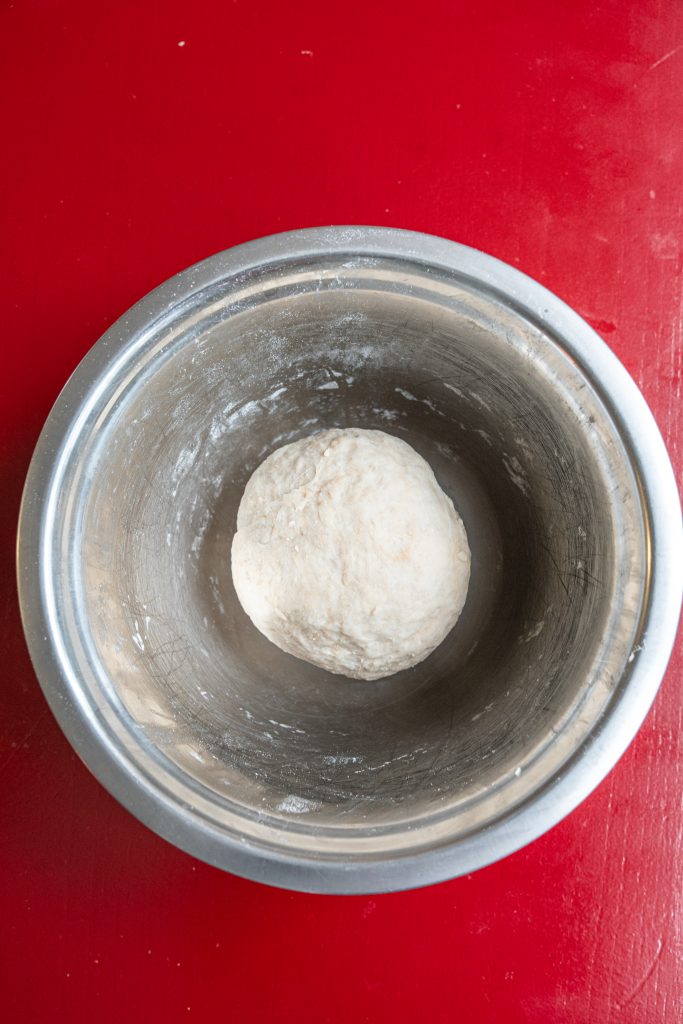
- Cover the dough and let it rise in a warm place for 1-2 hours (timing will depend on ambient temperature) or at least double in size.
- Separate the dough into three smaller balls, cover and let it rest for 10 minutes. Resting the dough will allow the gluten to relax and make it easier to roll out. At this time, you can start preheating the oil to medium heat.
- Roll each ball on a well floured surface to get a circle that is about 6 inches in diameter and about 1/2 inch thick. Cut the circle into quarters.
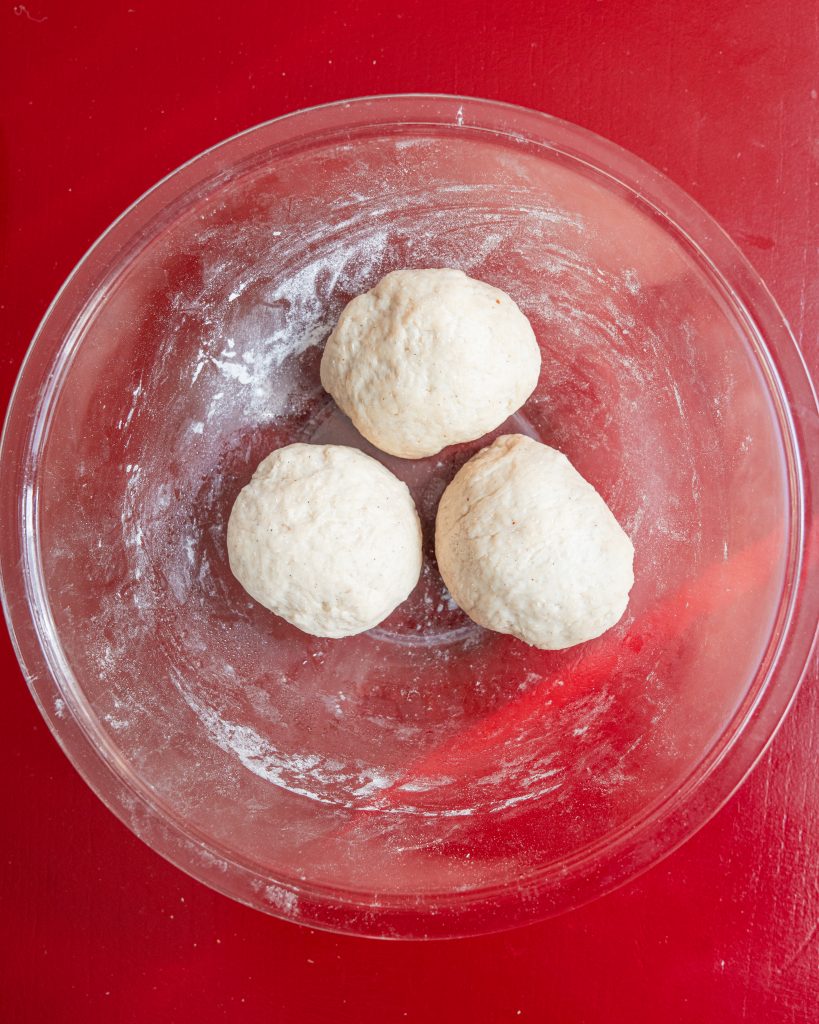
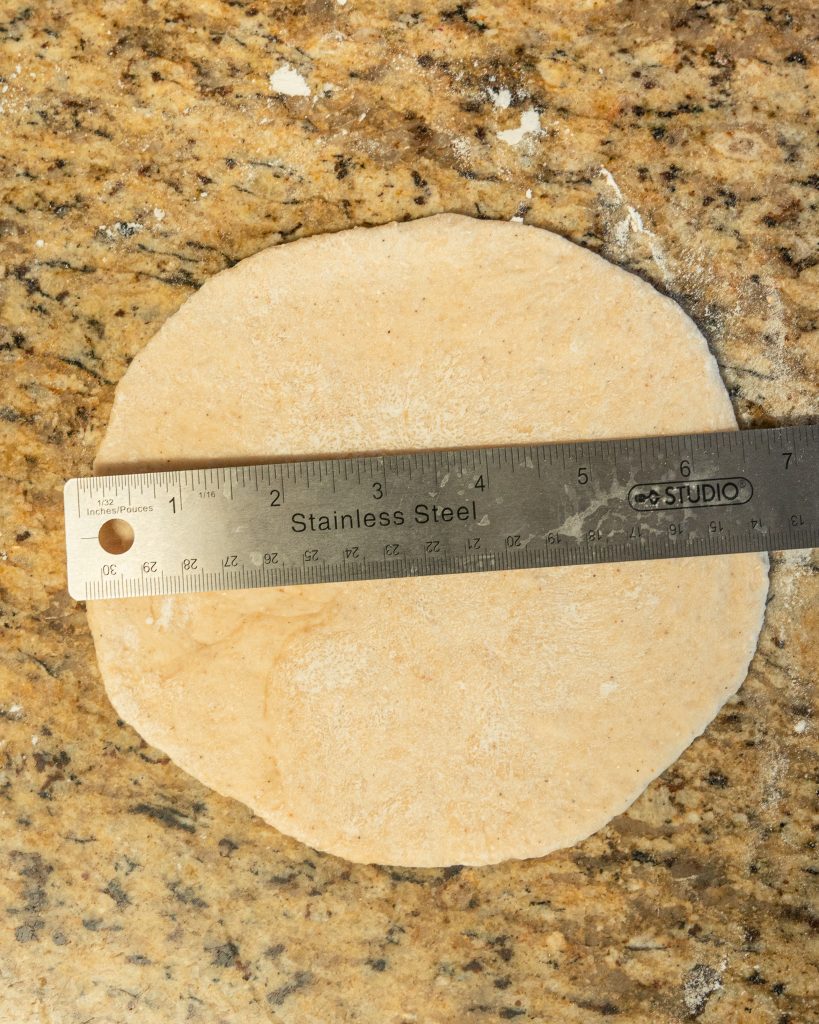
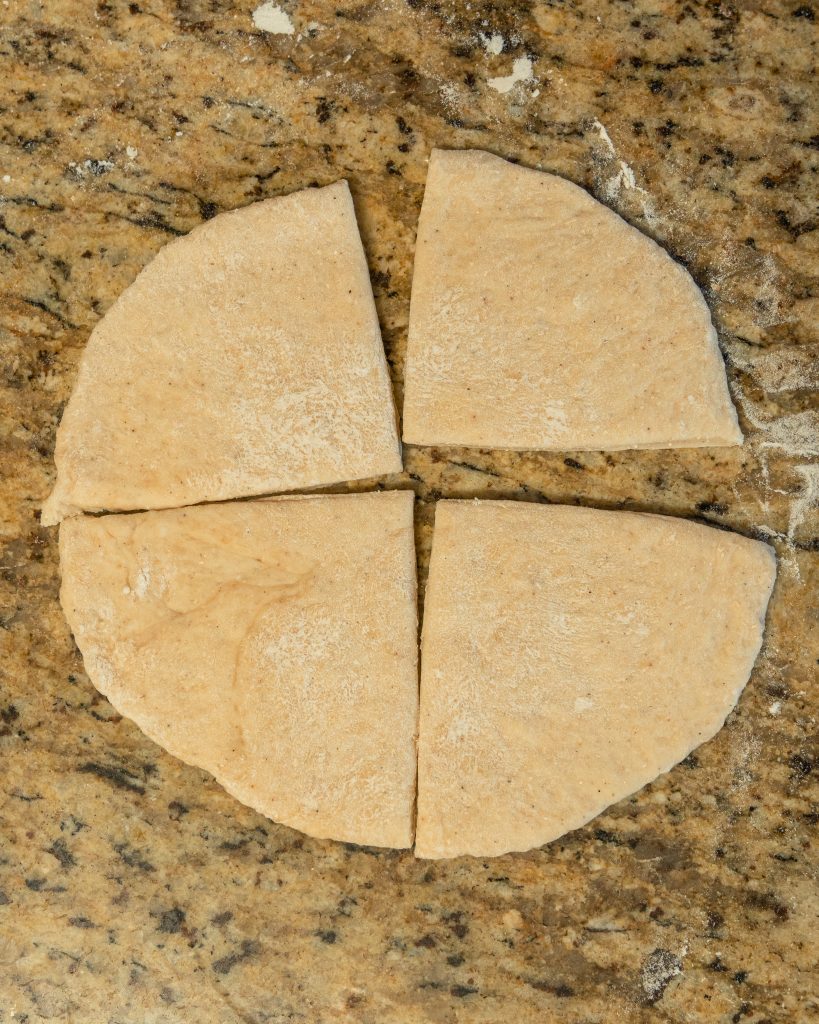
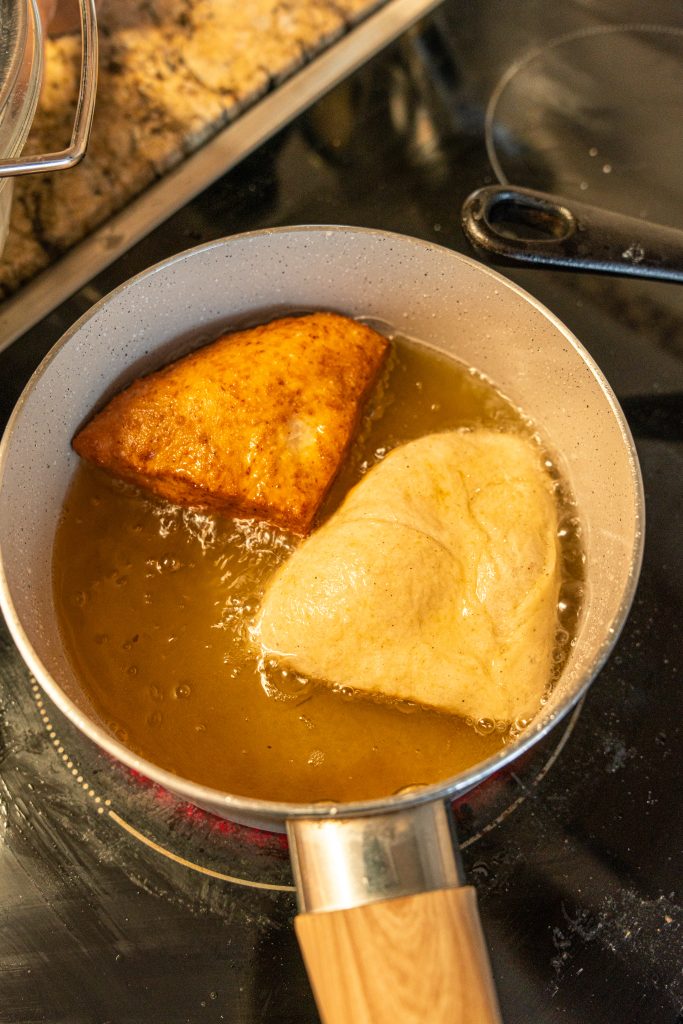
- Fry the mandazi at medium heat on one side for about 2 minutes; the mandazi will puff up as it fries, do not be tempted to flip it until golden brown. Then flip and cook on the other side.
- Repeat the frying process until all the dough has been fried
What to eat with Mahamri
- Mahamri is best enjoyed with chai or beans (maharagwe or mbaazi ya nazi).
How to store this recipe
Mahamri are best enjoyed hot and fresh but I also meal prep a large batch and freeze these. When you are ready to eat them you can reheat straight from frozen in the microwave for about 30 seconds or on low heat in the airfryer for 3-5 minutes.
Want to try more East African Recipes?


Ingredients
- 2 cups All Purpose Flour 240g
- 1/8 teaspoon of salt
- 2 teaspoon of instant yeast
- 1/4 cup sugar 45g
- 1 tablespoon of vegetable oil
- 2/3 cup of warm plant based milk preferably coconut
- 1/4 teaspoon ground cardamom
- Vegetable Oil enough to fill a medium sized pot 2/3rd of the way
Instructions
- Mix the dry ingredients (flour, salt, sugar, yeast)
- Add the oil
- Slowly add in the warm milk until you achieve a cohesive dough. You might not need all the milk
- Knead for 10 minutes to get a soft dough
- Cover the dough and let it rise in a warm place for 1-2 hours until it doubles in size.
- Split the dough into three balls and let them rest for about 10 minutes as you preheat the oil. You do not want the oil to get too hot
- Fill a wide pan or pot with enough oil to fill about 2/3s in volume.
- On a well floured surface, roll out each ball into circles about 6 - 7 inches wide and 1/2 inch thick. Cut the circles into quarters
- Fry each piece in the oil, maintaining the heat at medium heat and not overcrowding the pot. Fry on one side at a time for about 2-3 minutes to ensure the mahamri puff up sufficiently and turn a light golden brown. This also gives the mahamri its signature white line.
- Serve hot