
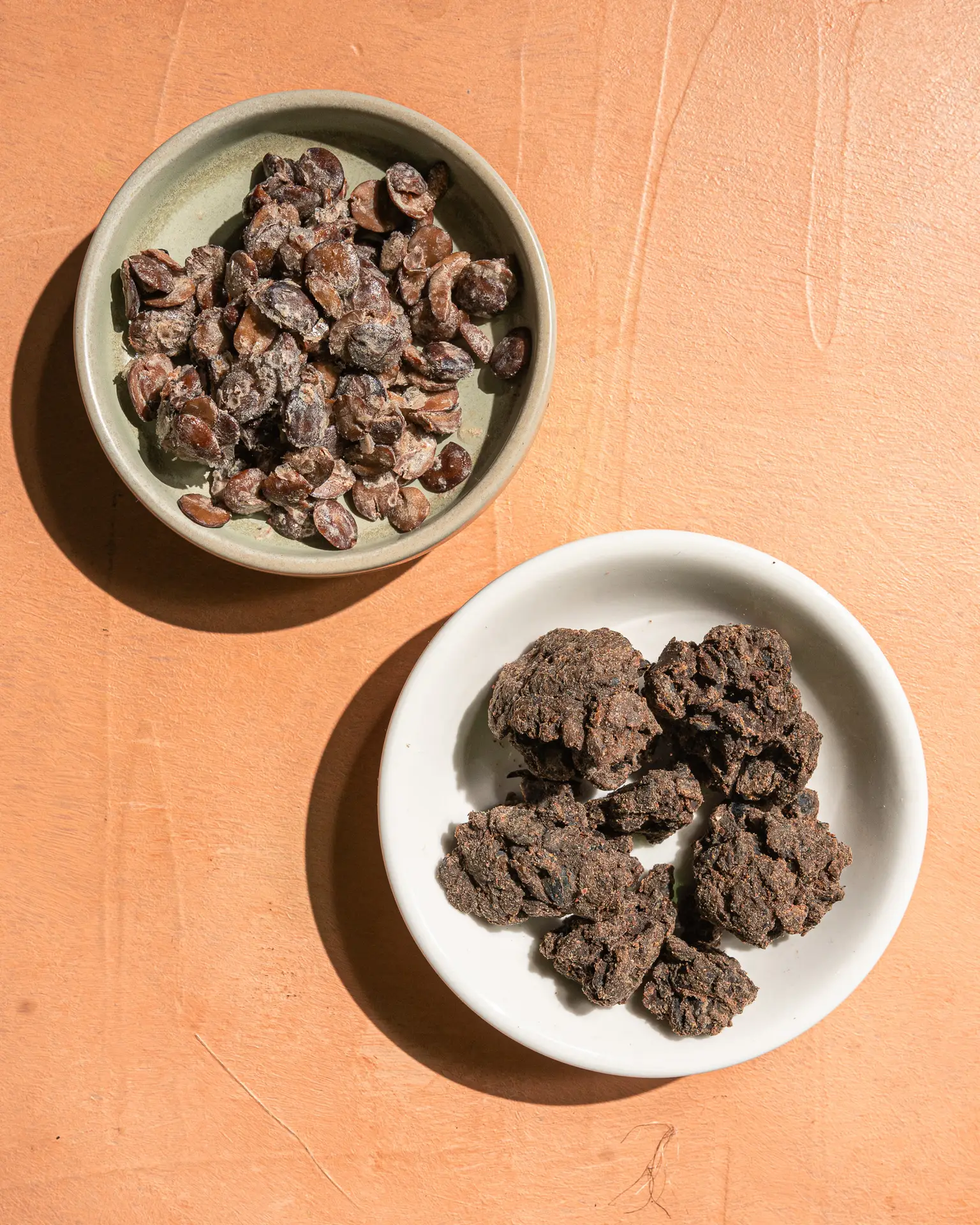
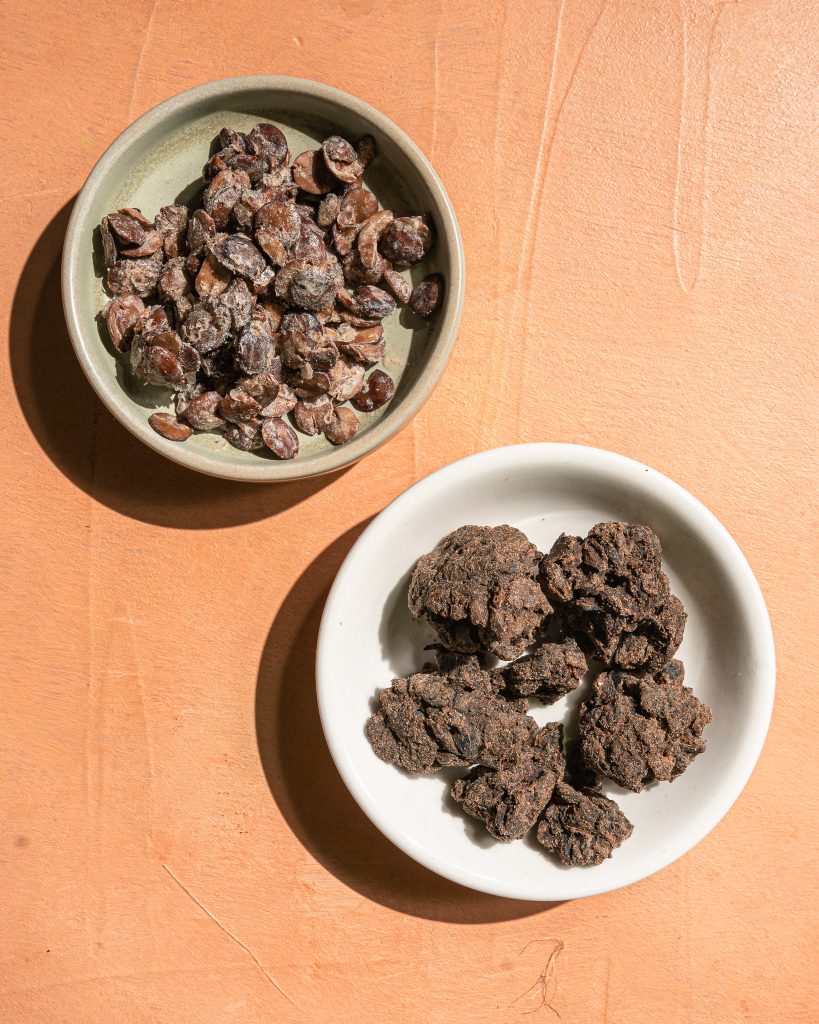
Fermented locust beans are important flavour additives in West African cooking. They are made through the alkaline fermentation of African Locust beans, a popular processing method for indigenous oilseeds. Many cultures refer to them with a number of names — iru, ogiri, dadawa, dawa dawa, nere, soumbala, netetou, kolgo, afiti, etc.
These have been dubbed the original Maggi cube, as they offer an unmatched umami flavour, even compared to commercially available bouillon or seasoning cubes. This is my most important cooking ingredient, as it brings a familiar flavour, aroma, and taste to my plant-based West African dishes; therefore, it was important to have a dedicated post to discuss it in depth.
In this post, I will cover everything you need to know about fermented locust beans — where it comes from, how it is made, the flavour profile, and how to cook with it, traditionally and creatively. If you prefer to learn about this ingredient through video, a link to a YouTube video has been left at the bottom of this post.
Where do Fermented Locust Beans Come From?
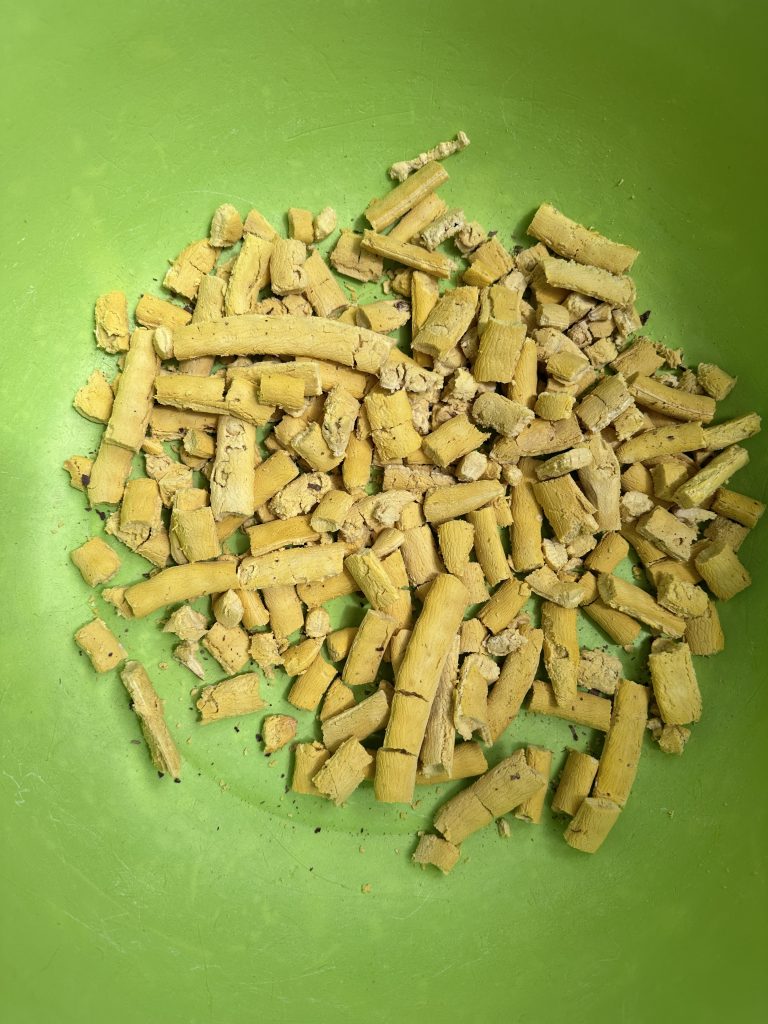
Fermented locust beans are produced from the seeds/beans of the African locust fruit tree — parkia biglobosia. This tree is indigenous to the Sahelian region of West Africa, where it flowers and fruits during the hottest times of the year. The African locust tree is of great significance, with its fruit, seeds, and bark used for many purposes, such as medicine, food, and paint.
When the locust fruit is in season, it is left to dry on the tree before processed into fermented locust beans. The bark of the fruit can be turned into paint or burned into ash needed for alkaline fermentation. The fruit inside the pods is slightly sweet and tart, with a dry texture, reminiscent of velvet tamarinds. These can be sucked on for enjoyment, or, in my case, used to make a smoothie. The leftover seeds, which from initial sight might look unremarkable, are the most valuable parts of the tree. We get a true display of the ingenuity in West African food traditions when the inedible seeds are processed into magical flavour additives.

How were Fermented Locust Beans invented?
The history and invention of fermented locust beans, and how they were eventually turned into fermented flavour additives, are a mystery to many. But, as many Ghanaian herbalists have told me, including my great-grandmother, much of how we have come to understand our natural world has been revealed through dreams from ancestors. A common answer that highlights the interconnection between food and spirituality. Other explanations include direction by an animal connected to an ancestor or a god in the spiritual realm, or a not-so-happen-chance encounter with a spiritual entity. Rarely are things ascribed to chance alone. I am not sure which path brought us fermented locust beans, but every unique and important part of our food traditions is always connected to spiritual practices.
How are Fermented Locust Beans Made
The beans/seeds of the locust fruit are subjected to a 3-day process of boiling, pounding, fermenting, and drying to get the final product. Across West Africa, there are slight variations in the process, but I will share what I learned in Tongo (Upper East Ghana). As an aside, the dried pods can be used as a dye/natural paint for homes.
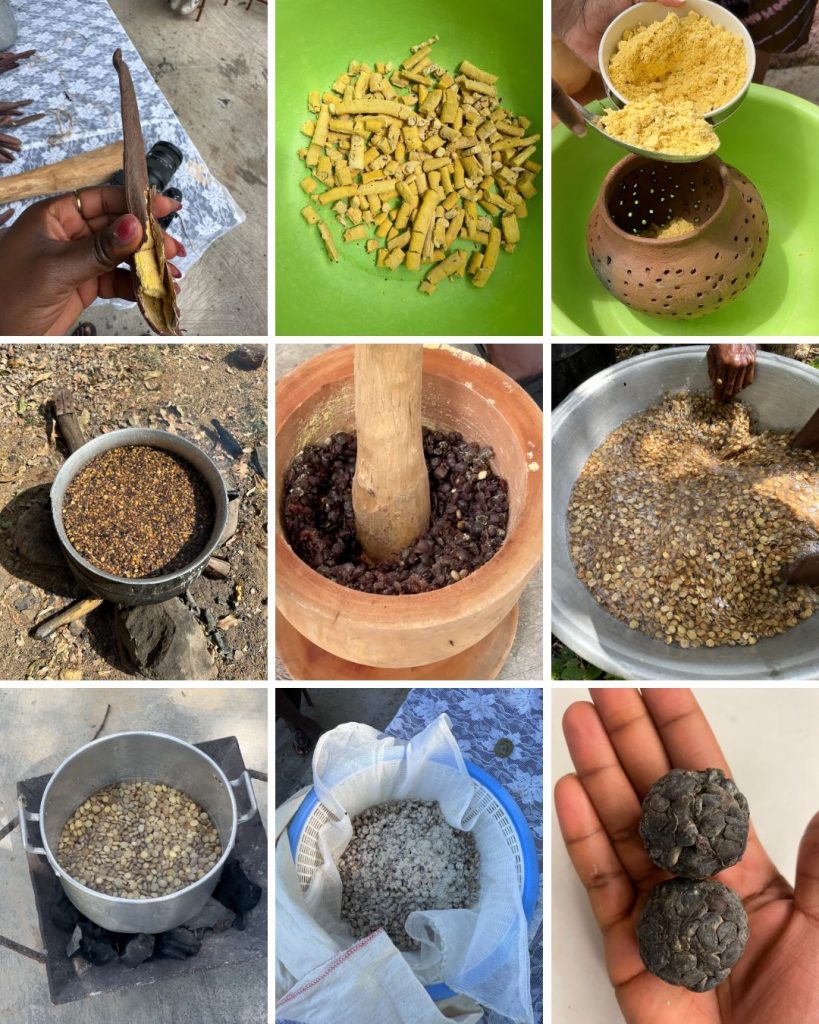
The fruits are removed from the dried pulp.
The fruits are pounded to separate the seed from the fruit.
A special clay pot, made just for sieving out the locust beans, is used to separate the dried seeds from the fruit.
The seeds are boiled for hours.
The boiled seeds are pounded (with sand) to remove the outer shell.
The seeds are thoroughly washed and boiled until tender — these are great snacks.
The beans are layered in a colander with ash or millet and fermented for 48 hours. This step is where the magic really happens.
The fermented seeds are dried — some clump it into a ball as they dry.
The Science of West African Alkaline Fermentation + Health Benefits
Many of the fermented foods we know and love are acidic. Yeast and bacteria digest the sugars in foods and turn them into alcohol or an acid. This reduces the pH and turns the food sour.
Alkaline fermentation is a bit of a different process. Compared to acidic fermented foods that are carbohydrate-heavy, alkaline fermented foods have noticeable amounts of protein content. Locust beans are said to be about 35-40% protein. Fermenting these seeds in an alkaline environment (i.e with ash) is a recipe for a unique type of fermentation.
The bacteria involved in alkaline fermentation are a distinct subset of Bacillus. These bacteria break down the protein in these oil seeds into their amino acid building blocks, producing ammonia as a by-product, along with other odour compounds that give fermented locust beans a strong smell. This fermentation reaction increases the pH of the locust beans. Glutamate is also present amongst these amino acids, which contributes to the umami flavour, making fermented locust beans a natural MSG alternative. In addition, the complex carbohydrates in these seeds, which are usually indigestible, are broken down into simpler sugars that are easier to digest. (Reference) Lastly, fermentation and drying extend shelf life, making it a useful, long-lasting ingredient in the kitchen. In all, you go from an unpalatable, undigestible product to a completely different final product.
Many West African fermented foods are spontaneous; rarely are fungi or yeast used to inoculate the food (except for pito, which sometimes uses yeast). So there is a lot of variation based on the environment.
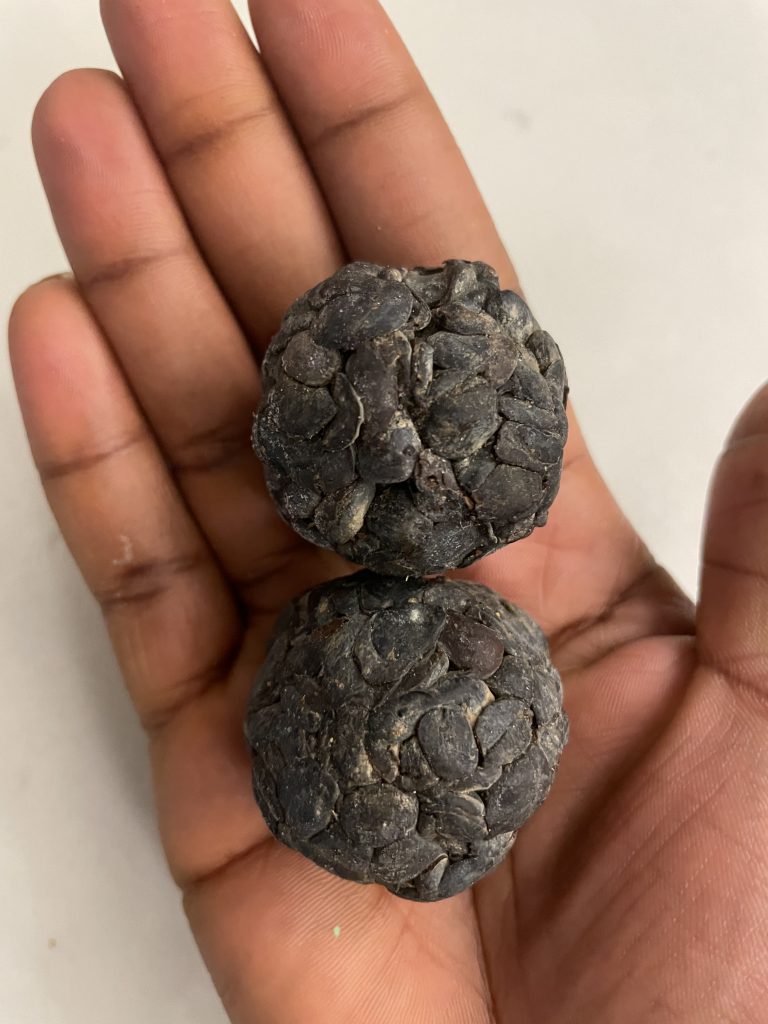
What do Fermented Locust Beans taste like
Like many West African ingredients, it is incredibly difficult to describe the flavour and taste. The recipe testers for my cookbook offered these descriptions
Dark Chocolate
Umami
Coffee
Gamey — like game meat
Funky
Smells like goat
Stinky like blue cheese
Some might think fermented locust beans can be described similarly to miso or doenjang, but they are definitely worlds apart. The fermentation process is closer to natto than to miso. I bring this up to highlight that some things need to be experienced firsthand to fully understand the flavour and intent.
How to Use Fermented Locust Beans
Fermented locust beans are used as flavour additives, packed with glutamate, umami, and aromas that make traditional West African dishes unique. Fermented locust beans are not as commonly used in southern Ghanaian cooking as people prefer fermented salted fish; however, since I do not eat meat, I use them in place of fermented salted fish, and it is perfect.
Here is a list of recipes where fermented locust beans feature prominently
- Umami Spice Blend: A Savoury blend of indigenous West African spices with fermented locust beans as the main source of umami
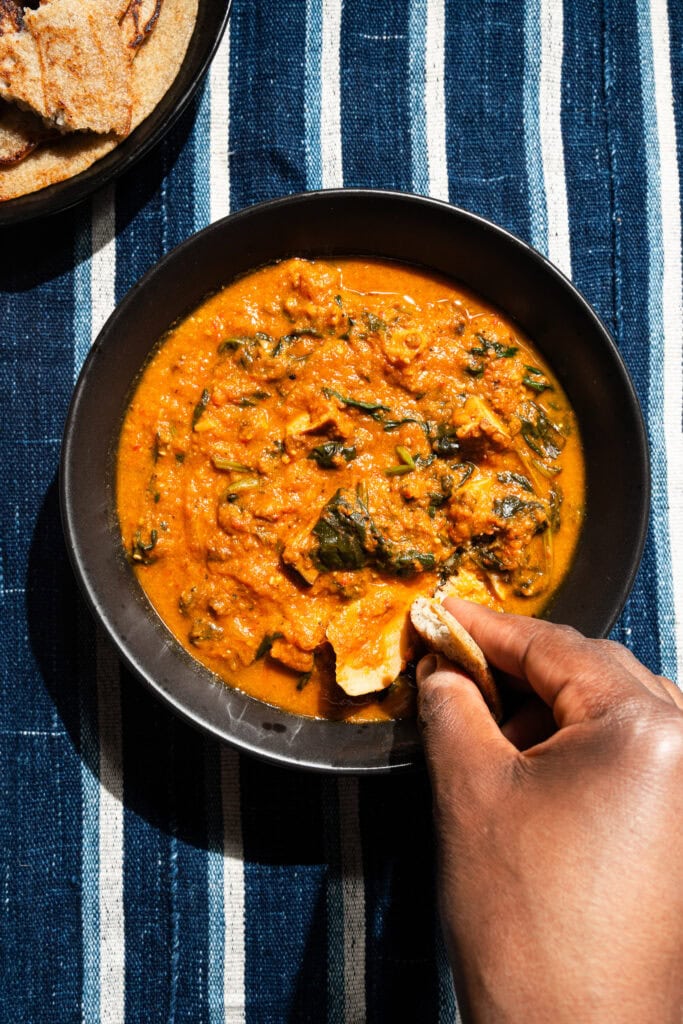
- Efo Riro: A Nigerian leafy green soupy stew with fermented locust beans featured as one of the first ingredients
- Dawa Dawa Chocolate Cookies: A creative use of fermented locust beans, pairing it with chocolate, which complements its rich flavour.
- Native Jollof Rice: A traditional jollof rice that uses indigenous West African ingredients.
- Nigerian Egusi Soup: The popular Nigerian soup made with melon seeds and a spicy tomato base. Fermented Locust Beans add an authentic umami flavour to the stew.
- Senegalese Mafe: This classic Senegalese peanut stew is flavoured with fermented locust beans for a savoury taste.
- Miyan Taushe: This northern Nigerian peanut pumpkin soup relies on fermented locust beans for a traditional and incredibly savoury flavour.

Where to buy Fermented Locust Beans
Local African stores sell them; I recommend purchasing the dried powder version as that offers you the most flexibility.
For US and Canada shoppers, online spice companies Burlap and Barrel stock them. I also recommend checking out MyChopChop, an online West African grocery store based in Ontario that ships nationwide.
You can also check Etsy and Facebook Marketplace for online vendors.
Unfortunately, nothing works as a perfect substitute.
Are you a visual learner?
Check out this deep dive YouTube video on Fermented Locust Beans. In this video I talk about how fermented locust beans are made, share more details about flavour profile and uses, and cook a delicious recipe that showcases it’s flavour.